What is Melanoma?
Melanoma is a type of skin cancer that arises from the pigment-producing cells (melanocytes) in the skin. It is often more aggressive than other types of skin cancer and can spread to other parts of the body if not treated. Melanoma can occur anywhere on the skin, but it is more common in certain areas, such as the face, legs, and back.
Melanoma is caused by mutations in the DNA of the melanocytes, which can be triggered by exposure to UV radiation from the sun or from tanning beds. People with lighter skin are more prone to melanoma, but it can also occur in people with darker skin.
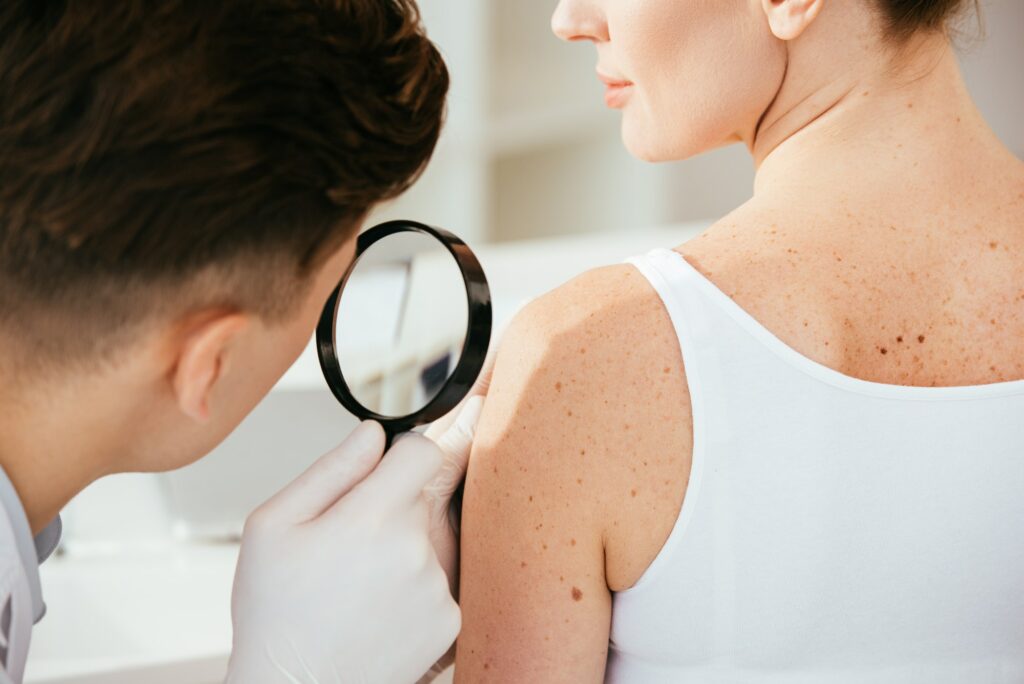
Melanoma is usually characterised by the appearance of a new mole or a change in an existing mole. It is important to regularly check your skin for any changes and to see a dermatologist if you notice any new or unusual growths on your skin. Early detection and treatment of melanoma can often lead to a successful outcome.
Tell me the difference between skin cancer and Melanoma?
Skin cancer is a type of cancer that affects the cells of the skin. There are several different types of skin cancer, but the most common are basal cell carcinoma, squamous cell carcinoma, and melanoma.
Basal cell carcinoma is the most common type of skin cancer, and it typically develops on areas of the skin that are exposed to the sun, such as the face, neck, and hands. It is usually a slow-growing cancer that does not typically spread to other parts of the body.
Squamous cell carcinoma is another common type of skin cancer, and it also typically develops on areas of the skin that are exposed to the sun. It is often more aggressive than basal cell carcinoma and can spread to other parts of the body if not treated.
Melanoma is a more aggressive type of skin cancer that arises from the pigment-producing skin cells called melanocytes. It is often more aggressive than other types of skin cancer and can spread to other parts of the body if not treated. Melanoma is more likely to occur in people with lighter skin, but it can also occur in people with darker skin.
In summary, the main difference between skin cancer and melanoma is the type of cells that are affected and the aggressiveness of the cancer. Basal cell carcinoma and squamous cell carcinoma typically affect the outer layers of the skin and are less aggressive, while melanoma affects the pigment-producing cells and can be more aggressive. It is important to recognize the signs of skin cancer and to see a dermatologist if you notice any changes in your skin. Early detection and treatment can often lead to a successful outcome.

How can I check for skin cancers?
There are several things you can do to check for skin cancer:
- Perform a self-examination: Examine your skin regularly, looking for any new moles or changes in existing moles. Pay particular attention to areas that are exposed to the sun, such as the face, neck, arms, and legs. Look for any moles that are asymmetrical, have irregular borders, are more than one colour, are larger than a pencil eraser, or have a diameter greater than 6mm. These are all warning signs of melanoma.
- Use the ABCDE rule: This rule can help you identify potentially cancerous moles. The ABCDE rule stands for:
- Asymmetry: If you draw a line through the mole and the two halves do not match, this could be a sign of melanoma.
- Border: Look for moles with irregular, jagged, or blurry borders.
- Colour: Melanomas can be a variety of colours, including brown, black, and multiple shades of tan, blue, or red.
- Diameter: Melanomas are usually larger than 6mm in diameter (about the size of a pencil eraser).
- Evolving: If a mole is changing in size, shape, or colour, or if you have a new mole, it could be a sign of melanoma.
- See a dermatologist: If you notice any changes in your skin or if you have a family history of skin cancer, it is important to see a dermatologist. A dermatologist can examine your skin and perform a biopsy if necessary to determine if a mole is cancerous.
It is important to remember that early detection is key to successful treatment of skin cancer. If you notice any changes in your skin or have any concerns, be sure to speak with a dermatologist.
How is skin cancer diagnosed?
Skin cancer is usually diagnosed by a dermatologist, a healthcare provider who specialises in the treatment of skin conditions. There are several methods that a dermatologist may use to diagnose skin cancer:
- Visual examination: A dermatologist will usually start by visually examining the suspicious area of skin. They will look for any unusual moles or growths and may use a dermatoscope, a handheld device that magnifies the skin, to get a closer look.
- Biopsy: If the dermatologist suspects that a mole or growth may be cancerous, they may recommend a biopsy. A biopsy is a procedure in which a small sample of tissue is removed and examined under a microscope to determine if it is cancerous. There are several types of biopsies that a dermatologist may use, including a shave biopsy, punch biopsy, and excisional biopsy.
- Imaging tests: In some cases, a dermatologist may recommend imaging tests to get a better view of the suspicious area and to check for any spread of cancer to other parts of the body. These tests may include X-rays, CT scans, PET scans, or MRIs.
It is important to note that only a biopsy can confirm a diagnosis of skin cancer. If a biopsy reveals that a mole or growth is cancerous, the dermatologist will determine the type and stage of the cancer and develop a treatment plan.

Can skin cancer be prevented?
There are several steps you can take to reduce your risk of developing skin cancer:
- Protect your skin from the sun: The most effective way to prevent skin cancer is to protect your skin from the sun. When you are outside, wear protective clothing, such as a hat, long-sleeved shirt, and pants. Use a broad-spectrum sunscreen with an SPF of 30 or higher, and apply it to all exposed skin 15-30 minutes before going outside. Reapply every two hours or after swimming or sweating.
- Avoid tanning beds: Tanning beds emit harmful UV radiation that can increase your risk of skin cancer. It is best to avoid using tanning beds altogether.
- Examine your skin regularly: Check your skin regularly for any new moles or changes in existing moles. Use the ABCDE rule to identify potentially cancerous moles (asymmetry, border, colour, diameter, evolving).
- Get vaccinated: The HPV vaccine can help prevent certain types of skin cancer caused by certain strains of human papillomavirus (HPV).
- Practice good skin care: Take care of your skin by keeping it moisturised and avoiding harsh chemicals. Avoid picking at moles or skin growths, and see a dermatologist if you notice any changes in your skin.
By following these prevention steps, you can reduce your risk of developing skin cancer. It is also important to see a dermatologist regularly for skin cancer screenings, especially if you have a family history of skin cancer or have had skin cancer in the past.
What is the treatment for melanoma and skin cancers?
The treatment for melanoma and skin cancer depends on the type, stage, and location of the cancer, as well as the patient’s overall health. Some common treatments for melanoma and skin cancer include:
- Surgery: Surgery is the most common treatment for melanoma and skin cancer. The type of surgery depends on the size and location of the cancer. For small melanomas or skin cancers, a simple excision may be sufficient, in which the cancerous tissue is cut out and the surrounding skin is stitched together. For larger melanomas or skin cancers or cancers that have spread to other parts of the body, a wider excision or a skin graft may be necessary.
- Mohs surgery: Mohs surgery is a specialised type of surgery that is often used to treat melanomas and skin cancers on the face or other sensitive areas. In this procedure, the cancerous tissue is carefully removed layer by layer and examined under a microscope until no cancerous cells remain. This allows the surgeon to remove the cancerous tissue while preserving as much healthy tissue as possible.
- Radiation therapy: Radiation therapy uses high-energy beams to kill cancer cells. It is often used to treat melanomas and skin cancers that are not suitable for surgery or to treat cancer that has spread to other parts of the body.
- Chemotherapy: Chemotherapy is a treatment that uses drugs to kill cancer cells. It is often used to treat advanced melanomas and skin cancers that have spread to other parts of the body.
- Immunotherapy: Immunotherapy is a type of treatment that uses the body’s own immune system to fight cancer. It is often used to treat advanced melanomas and skin cancers that have not responded to other treatments.
The treatment plan for melanoma and skin cancer will depend on the individual patient and the specifics of their case. It is important to work with a healthcare team, including a dermatologist, oncologist, and other specialists, to determine the most appropriate treatment plan.
sun protection beauty sunscreen on the beach.
Are there complications of skin cancer treatment?
As with any medical treatment, there are potential complications of skin cancer treatment. The specific complications will depend on the type of treatment and the individual patient. Some common complications of skin cancer treatment include:
- Scarring: Surgery to remove skin cancer can result in scarring. In some cases, the scar may be noticeable, but in other cases, it may be less noticeable.
- Infection: There is a risk of infection after any surgical procedure. This risk can be minimized by following the care instructions provided by the healthcare team and by taking any prescribed antibiotics as directed.
- Changes in skin color: Some treatments, such as radiation therapy, can cause changes in the color of the skin. The skin may become lighter or darker, or it may develop freckles or discoloration. These changes may be temporary or permanent.
- Numbness or tingling: Some treatments, such as surgery or radiation therapy, may cause numbness or tingling in the affected area. This may be temporary or permanent.
- Fatigue: Some cancer treatments, such as chemotherapy and radiation therapy, can cause fatigue. It is important to rest and take breaks as needed, and to talk to the healthcare team about any fatigue that is affecting daily activities.
It is important to discuss any potential complications with the healthcare team before starting treatment and to follow their care instructions to minimize the risk of complications. It is also important to report any concerns or unusual symptoms to the healthcare team as soon as possible.
Risk factors for skin cancer and melanoma
There are several risk factors for skin cancer and melanoma, including:
- Exposure to UV radiation: The most significant risk factor for skin cancer and melanoma is exposure to UV radiation from the sun or from tanning beds. UV radiation damages the DNA in skin cells, which can lead to cancer.
- Fair skin: People with fair skin, light hair, and light eyes are more prone to skin cancer and melanoma because they have less melanin, a pigment that protects the skin from the harmful effects of UV radiation.
- Family history: If you have a family history of skin cancer or melanoma, you may be at increased risk of developing these cancers.
- A personal history of skin cancer or melanoma: If you have had skin cancer or melanoma in the past, you are at increased risk of developing these cancers again.
- Exposure to certain chemicals: Certain chemicals, such as arsenic and certain industrial chemicals, can increase the risk of skin cancer and melanoma.
- Weakened immune system: People with weakened immune systems, such as those with HIV/AIDS or those taking immunosuppressant drugs, are at increased risk of skin cancer and melanoma.
- Age: The risk of skin cancer and melanoma increases with age.
By minimising exposure to UV radiation, practicing good skin care, and seeing a dermatologist regularly, you can reduce your risk of developing skin cancer and melanoma. If you are at increased risk of these cancers due to any of the above factors, it is especially important to take precautions to protect your skin.
Is a family history of melanoma a risk factor?
Yes, having a family history of melanoma is a risk factor for developing melanoma. If you have a family member who has had melanoma, you are at increased risk of developing the disease. It is important to discuss your family medical history with your dermatologist and to follow recommended skin cancer prevention measures, such as protecting your skin from the sun and avoiding tanning beds.
When should I see my doctor about changes in my skin?
You should see a dermatologist if you notice any changes in your skin, such as:
- A new mole or a change in an existing mole, including changes in size, shape, colour, or texture.
- A growth or sore that does not heal within a few weeks.
- A rash or patch of skin that is red, itchy, or painful.
- A change in the texture or color of a patch of skin.
- A growth that bleeds or develops a crust.
It is important to have any changes in your skin checked by a dermatologist, as early detection and treatment of skin cancer can often lead to a successful outcome. If you are unsure whether a change in your skin is cause for concern, it is best to consult with a dermatologist for an evaluation.
Docto can help with any skin concerns you may have with our online Dermatologist. Find out more here.
BY SAMANTHA
DECEMBER 21, 2022
This blog is for informational purposes only and does not constitute medical advice. Please consult a licensed healthcare provider for diagnosis and treatment.





 Winner